
The Mediterranean Diet: Its Origins in Cilento
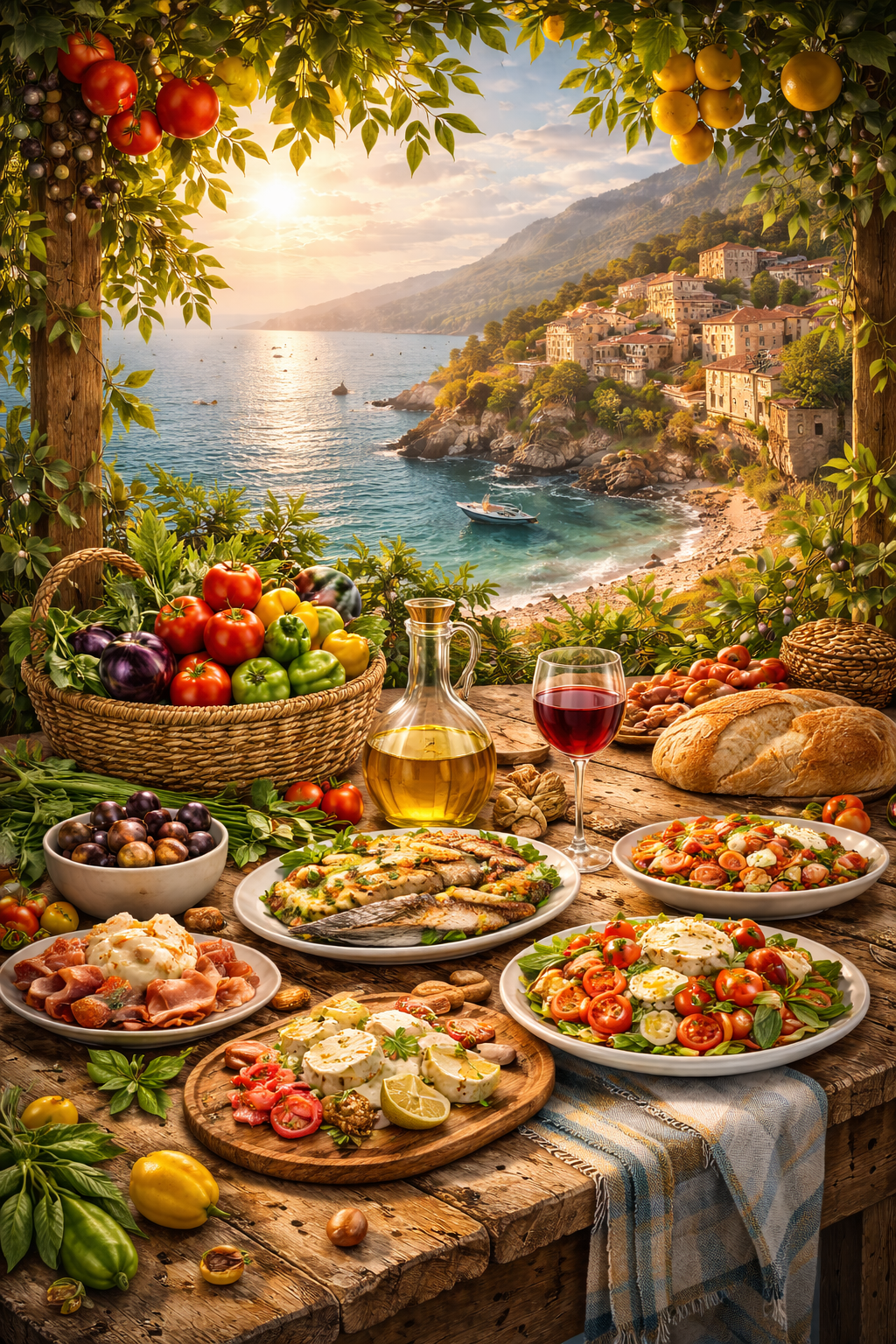
The Mediterranean Diet was born as an authentic expression of a region and its people. It is not a recent fad, but the result of centuries of food traditions developed along the Mediterranean coasts. It is in Cilento, a land where sea, hills, and ancient culture meet, that this lifestyle finds one of its deepest roots.
The products that still characterize Cilento cuisine today are the same ones that shaped this dietary model: simple, local, and authentic ingredients, the fruit of a balanced relationship with nature.
An Ancient Diet
Since ancient times, the people of Cilento have based their diet on what the land and sea offered daily: grains, legumes, olive oil, fruit, vegetables, fish, and wine consumed in moderation.
Bread, pasta, legume soups, seasonal vegetables, and extra virgin olive oil were the basis of home cooking. Even today, many of these foods are produced using traditional methods, preserving intact the flavors and nutritional values that tell a thousand-year history.
Cilento: The Cradle of the Mediterranean Diet
In the 20th century, Cilento became a global hub for the study of the Mediterranean Diet. In particular, the village of Pioppi, a hamlet of Pollica, attracted attention for the extraordinary longevity of its inhabitants and their simple yet balanced lifestyle.
Here, the daily diet consisted of local products: extra virgin olive oil, dried legumes, traditional grains, vegetables, fruit, preserves, and wine—all elements that still represent the area's gastronomic identity today.
Ancel Keys and the Discovery of the Mediterranean Diet
In the 1950s, American physiologist Ancel Keys moved to Pioppi with his wife, Margaret. Observing the eating habits of the Cilento inhabitants, he was struck by their health and the near absence of cardiovascular disease.
His research led to the birth of the famous "Seven Countries Study," which scientifically demonstrated that a diet based on vegetable fats, grains, legumes, and simple products was associated with a better quality of life.
Keys understood that olive oil, legumes, bread, pasta, and minimally processed foods were not just food, but the foundation of a profound balance between nutrition and well-being.
A Diet That's a Lifestyle
For Ancel Keys, the Mediterranean Diet wasn't just a list of foods, but a way of life: shared meals, daily physical activity, respect for seasonality, and a direct connection to the land.
This lifestyle is still reflected today in traditional Cilento products, the result of artisanal production, short supply chains, and knowledge passed down over time.
From Cilento to UNESCO Recognition
In 2010, the Mediterranean Diet was recognized by UNESCO as an Intangible Cultural Heritage of Humanity, with Cilento listed as one of the symbolic territories of its origin.
This recognition recognized not only a dietary model, but also the products that represent it: extra virgin olive oil, legumes, grains, preserves, and local specialties that continue to tell the story of this area.
A legacy that continues on the table
Today, the Mediterranean Diet lives on through the authentic flavors of Cilento. Each traditional product is the result of ancient knowledge, a generous land, and a culture that has made simplicity its strength.
Bringing these foods to your table means rediscovering an authentic connection with Cilento and a lifestyle that, for centuries, has represented a model of balance, flavor, and well-being.