
Cilento: Curiosities, Hidden Places, and Timeless Stories
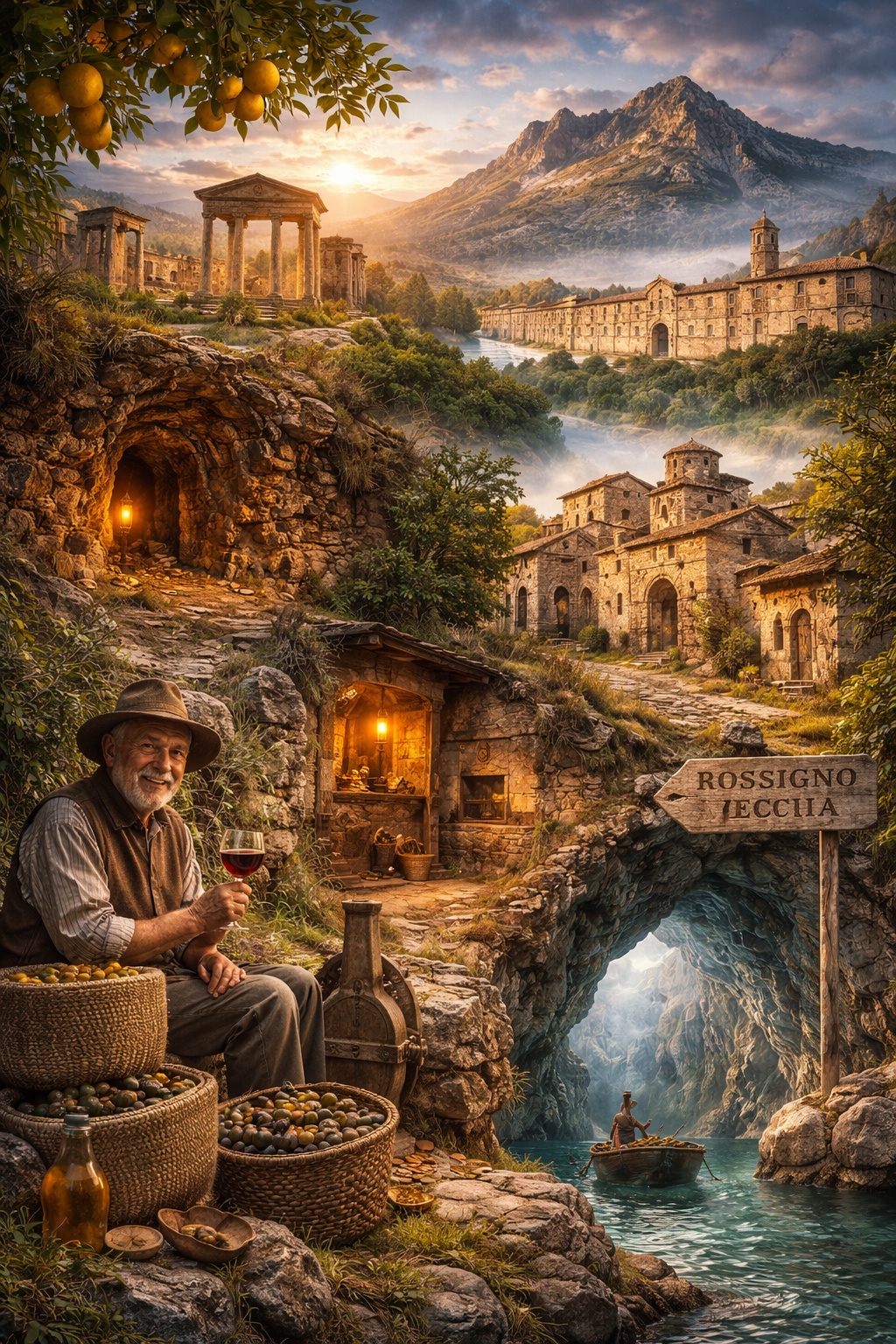
Cilento is an ancient and surprising land, where the natural landscape intertwines with a history of peoples, myths, and age-old traditions. Mountains, hills, and the sea coexist in a territory that has preserved its identity intact, far from the hustle and bustle of the great masses and rich in stories waiting to be discovered.
A Land of Borders and Passageways
Since ancient times, Cilento has been a land of borders and passageways. The Greeks of Magna Graecia, the Lucanians, the Romans, the Byzantines, and the Lombards have all crossed and inhabited these lands, leaving profound marks on the local culture.
This succession of civilizations has contributed to the creation of fortified villages, ancient roads, coastal towers, and rock sanctuaries. Even today, walking through Cilento's historic centers, one senses a unique stratification of diverse architecture, dialects, and traditions.
Ghost Towns: Time Stands Still
Cilento is home to some of Southern Italy's most evocative abandoned villages, places where time seems to have stood still.
Roscigno Vecchia, known as "the walking town," was abandoned in the early 20th century due to constant landslides. The square, the church, the houses, and even the shops remained intact, transforming the village into an open-air museum.
San Severino di Centola, perched on a rocky outcrop, tells a medieval story of castles, alleyways, and silence. The village, dominated by the ruins of the Norman castle, offers breathtaking views of the Mingardo Valley.
UNESCO World Heritage Sites in the Heart of Cilento
Cilento is one of the few Italian regions to boast such a high concentration of UNESCO-recognized sites. The Cilento, Vallo di Diano, and Alburni National Park is a World Heritage Site for its exceptional balance between nature and human presence.
Within the park are:
· the archaeological site of Elea-Velia, the cradle of Western philosophy
· the Certosa di San Lorenzo in Padula, one of the largest monastic complexes in Europe
· Pioppi, a symbol of the Mediterranean Diet
A heritage that recounts centuries of history, spirituality, and knowledge.
Origin of the Name "Cilento"
The name Cilento has ancient roots. According to the most widely accepted theory, it derives from the Alento River, which flows through the territory. In Roman times, the area was referred to as Cis Alentum, meaning "this side of the Alento River."
Over the centuries, Cis Alentum transformed into Cilento, giving its name to an entire natural region that still retains a strong geographical and cultural identity.
Legends and Folk Tales
Cilento is a land rich in legends, passed down orally from generation to generation.
The Legend of Mount Bulgheria
It is said that Mount Bulgheria, one of the most imposing mountains in Cilento, was inhabited by spirits protecting the land. Shepherds told of mysterious lights that appeared on moonless nights, interpreted as signs of protection or warnings to those who disrespected the mountain.
The Legend of the Bandits' Cave
In the most remote areas of the hinterland, it is said that bandits, during the post-unification period, knew secret caves connected by hidden passages. It is said that some of these caves held treasures never found, protected by spells and tied to the fate of those who attempted to steal them.
Villages, Traditions, and Collective Memory
Each village in Cilento preserves unique traditions linked to agricultural cycles, religious festivals, and community life. Festivals, processions, and peasant rites are not simply folkloristic events, but moments in which the community renews its connection with its history.
Bread, oil, wine, and other products of the land become symbols of a culture that has made simplicity its strength.
A Land to Experience Slowly
Cilento is a land to be experienced slowly. Its trails, quiet villages, and time-honored stories invite slow, mindful, and authentic tourism.
Discovering Cilento means coming into contact with a dimension where time takes on a different meaning, made of nature, memory, and identity.